
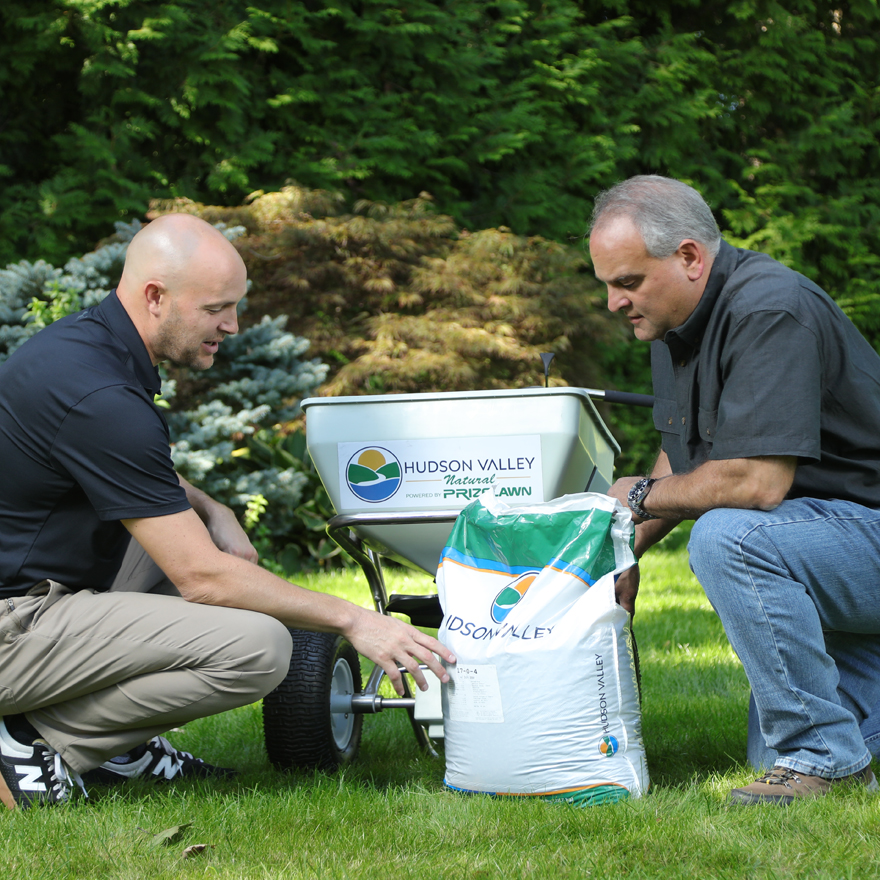


Both Dithiopyr and Prodiamine chemistries are cornerstone pre-emergents for annual grassy weeds (especially crabgrass), but they behave differently. Granular pre-emergent herbicide “loads” (percent active ingredient on fertilizer) are not simply a label detail—they directly determine whether the product can be applied at agronomically sound fertilizer rates while still delivering the correct herbicide dose.
When the load is wrong for the intended fertility program, you are forced to compromise by either undering-dose the herbicide, over-apply nitrogen and potassium, or createing uneven coverage because the granule volume per unit area no longer matches your spreader and calibration targets. This is why selecting the correct Dimension (dithiopyr) or Barricade (prodiamine) load on a Hudson Valley fertilizer or Central ProTurf fertilizer carrier matters as much as the chemistry choice itself.
Dimension (dithiopyr) is valued for:
- Strong pre-emergent performance on crabgrass and several other annual grasses.
- Early post-emergent activity on very young crabgrass (often described as “early post” or “pre + early post”), giving a small rescue window if timing slips.
- Flexible spring programs (single or split) where coverage uniformity is prioritized.
Barricade (prodiamine) is valued for:
- Long residual control—often the best option when you want extended season-long pre-emergent protection.
- Broad-spectrum annual grass control and commonly used support for goosegrass programs (timing-dependent and often paired with other strategies).
- Cost-effective residual when matched with the right carrier and application schedule.
From a practical standpoint, if you want a little forgiveness on timing, Dimension can be the better fit; if you want maximum residual longevity, Prodiamine often wins.
Why Load Matters on Fertilizer Carriers
The “load” (e.g., 0.15% Dimension or 0.37% Prodiamine) is the percent active ingredient (a.i.) by weight in the granular product. The load dictates how many pounds of product you must apply to deliver the target herbicide dose per acre (or per 1,000 sq ft). But fertilizer is not applied solely to deliver herbicide—fertilizer is applied to hit nutrient targets.
When the load and fertilizer programs are aligned, you can:
- Apply at a comfortable spreader setting (adequate granule volume for uniformity).
- Hit your nutrient target without excess growth.
- Deliver the correct herbicide rate without under- or over-shooting.
When they are misaligned, you get:
- Herbicide under-application (breakthrough and callbacks) or nutrient over-application (surge growth, disease pressure, mowing costs).
- “Light-rate striping” and coverage gaps if you are forced into very low lbs product/acre because the load is too concentrated for the fertility rate.
Want to learn more in depth about these chemical loads and the sweet spot for applications? Click here.
Timing: Making the Chemistry Work
For both Dimension and Prodiamine, the most important timing principle is simple: apply before target weed germination and water in.
- Spring crabgrass timing: Target application as soils approach ~50–55°F and are trending upward (often ahead of consistent daytime warming). Split applications are common, especially where spring is extended or where heavy rainfall can shorten performance.
- Dimension advantage on timing slip: If you are late, Dimension’s early post-emergent activity can provide a small buffer on very young crabgrass. That does not replace proper timing, but it can reduce the penalty of a delayed application.
- Prodiamine for season-long residual: Prodiamine shines when applied on time (or in split applications) to maintain a long residual barrier. It is a strong choice for properties where return visits are limited, and you want fewer “holes” later in summer.
- Fall programs (Poa annua focus): In many cool-season programs, a fall application is a key component of annual bluegrass (Poa annua) management. Product selection and timing depend on regional pressure and renovation plans.
Practical Guidance for Hudson Valley and Central ProTurf Fertilizer Programs
When you are selecting between Dimension and prodiamine on Hudson Valley fertilizer or Central ProTurf fertilizer, decide in this order:
- Define the agronomic goal: timing forgiveness (Dimension) vs maximum residual (prodiamine).
- Define the fertility rate you can responsibly apply: based on turf type, growth potential, mowing capacity, and stress period planning.
- Choose the load that lets you hit both targets simultaneously: avoid forcing herbicide rates through a fertility plan that doesn’t match.
When the load matches the plan, you get what the market demands: consistent control, predictable turf response, efficient labor, and fewer callbacks. When it doesn’t, you’re managing consequences all season. For some examples of successful Turf Programs utilizing these strategies click here.
Key Takeaway
Hudson Valley fertilizer and Central ProTurf fertilizer programs succeed when herbicide load, fertility rate, and timing are intentionally matched. The “best” Dimension or prodiamine load is not universal—it is the one that allows the applicator to deliver the right herbicide dose at the right nutrient rate with proper granule distribution. When those three factors align, performance becomes predictable and repeatable across an entire season.