
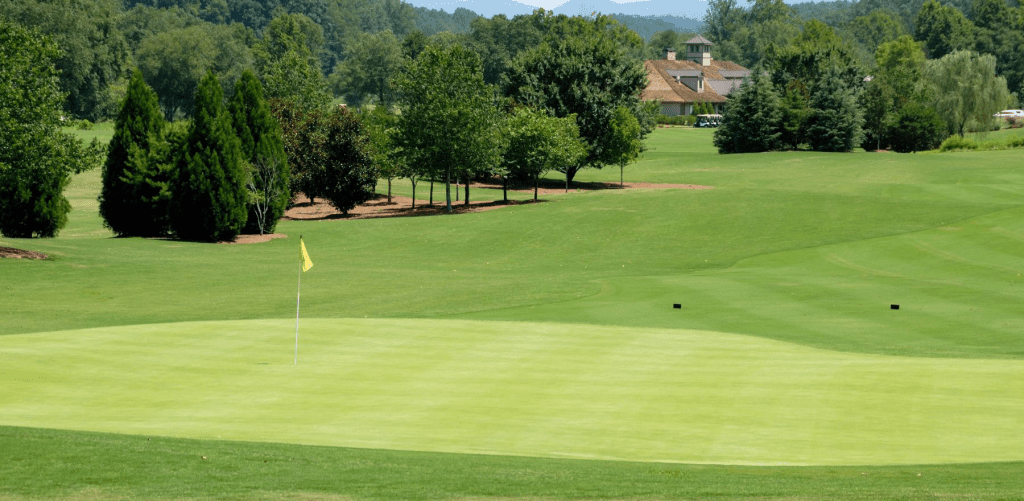


Disease doesn’t happen because of bad luck — it happens because three things line up at once: a susceptible host, a present pathogen and the right environment (heat, humidity, and moisture). We all know this as the disease triangle, and July is the month all three legs become heightened at the same time.
Bermudagrass Greens: The Heat Isn’t the Enemy — The Nights Are
Bermudagrass thrives in heat, but greens mowed at 0.120″ or lower are carrying very little carbohydrate reserve. The real stressor is high night temperatures. When it doesn’t drop below the mid-70s°F overnight, the plant respires through its sugar reserves faster than it can replace them through photosynthesis. That depleted, weakened plant is exactly the “susceptible host” the disease triangle needs.
Bentgrass Greens: Surviving, Not Thriving
Bentgrass is a cool-season grass being asked to survive conditions it wasn’t ideally built for. Once soil temperatures at the 2″ depth push past 80-85°F for extended periods, root mass declines, oxygen in the rootzone drops, and the plant shifts into pure survival mode. A Bentgrass green in July is operating with a smaller, more fragile root system and far less margin for error — which is why summer decline and disease pressure often arrive together.
Correct ID drives the correct chemistry. Treating Pythium like dollar spot (or vice versa) not only wastes a tank mix; it could mean the difference between surviving the summer with your greens intact or having to replace your greens and potentially looking for another job. Here’s a field-level comparison of the three diseases on every superintendent’s radar this month.
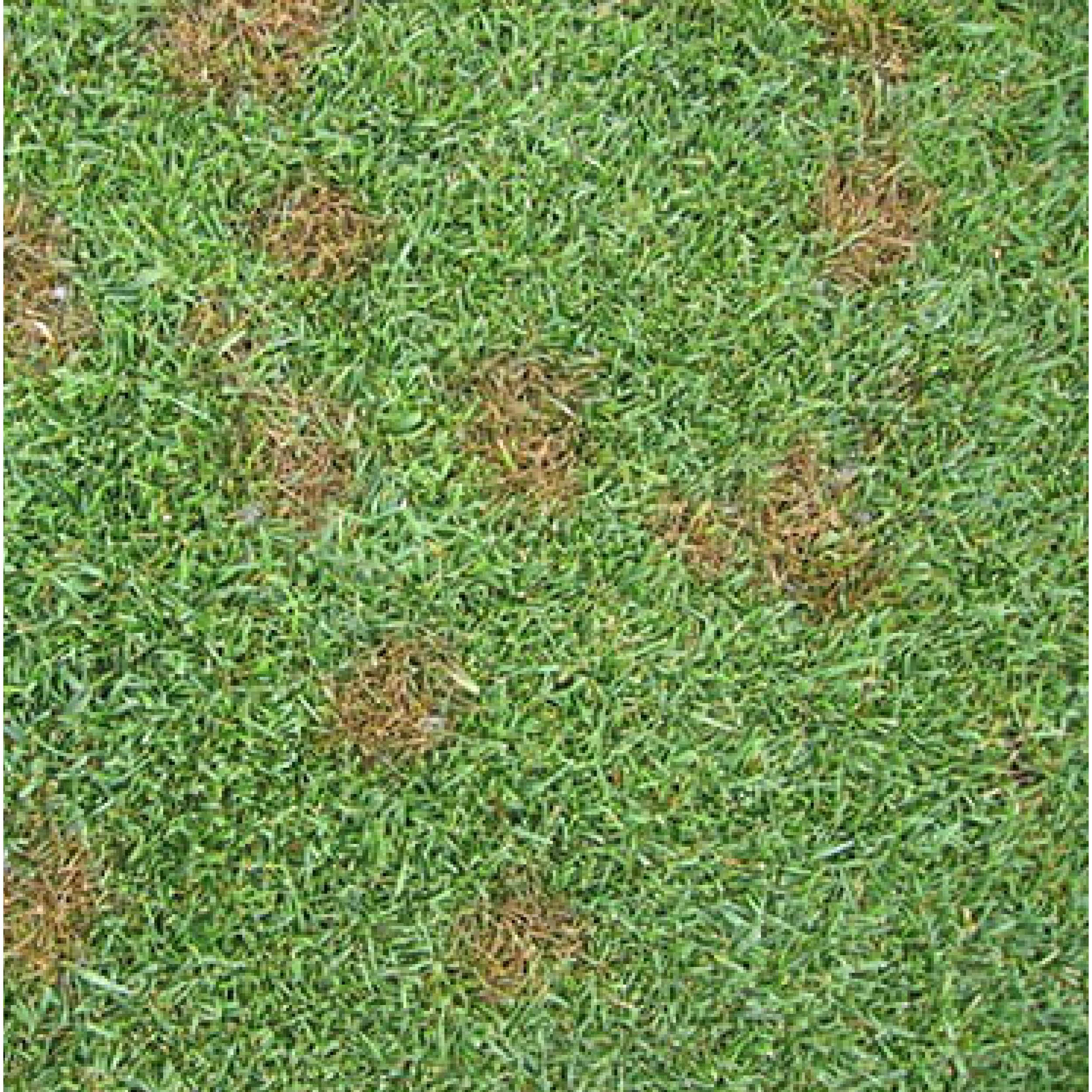
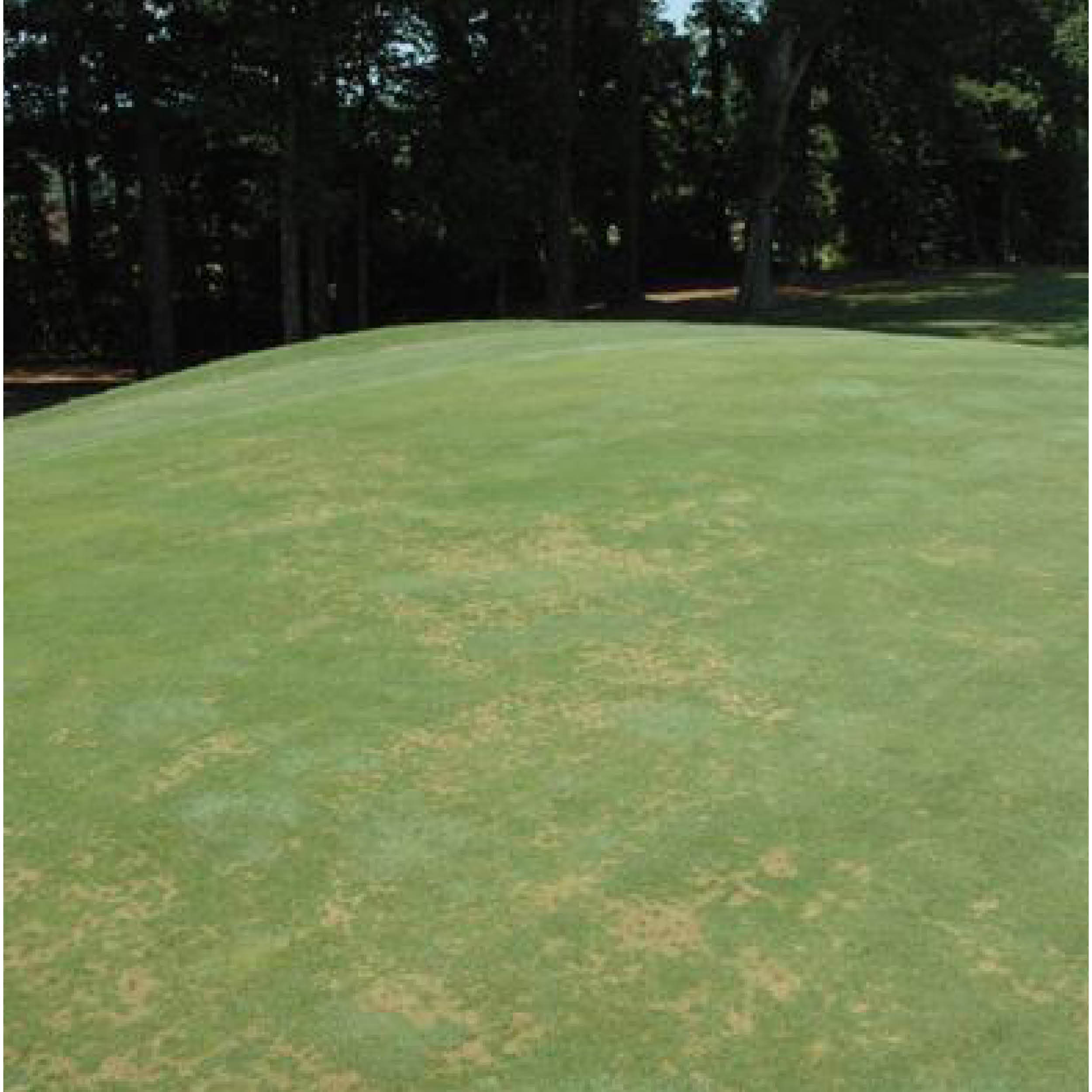
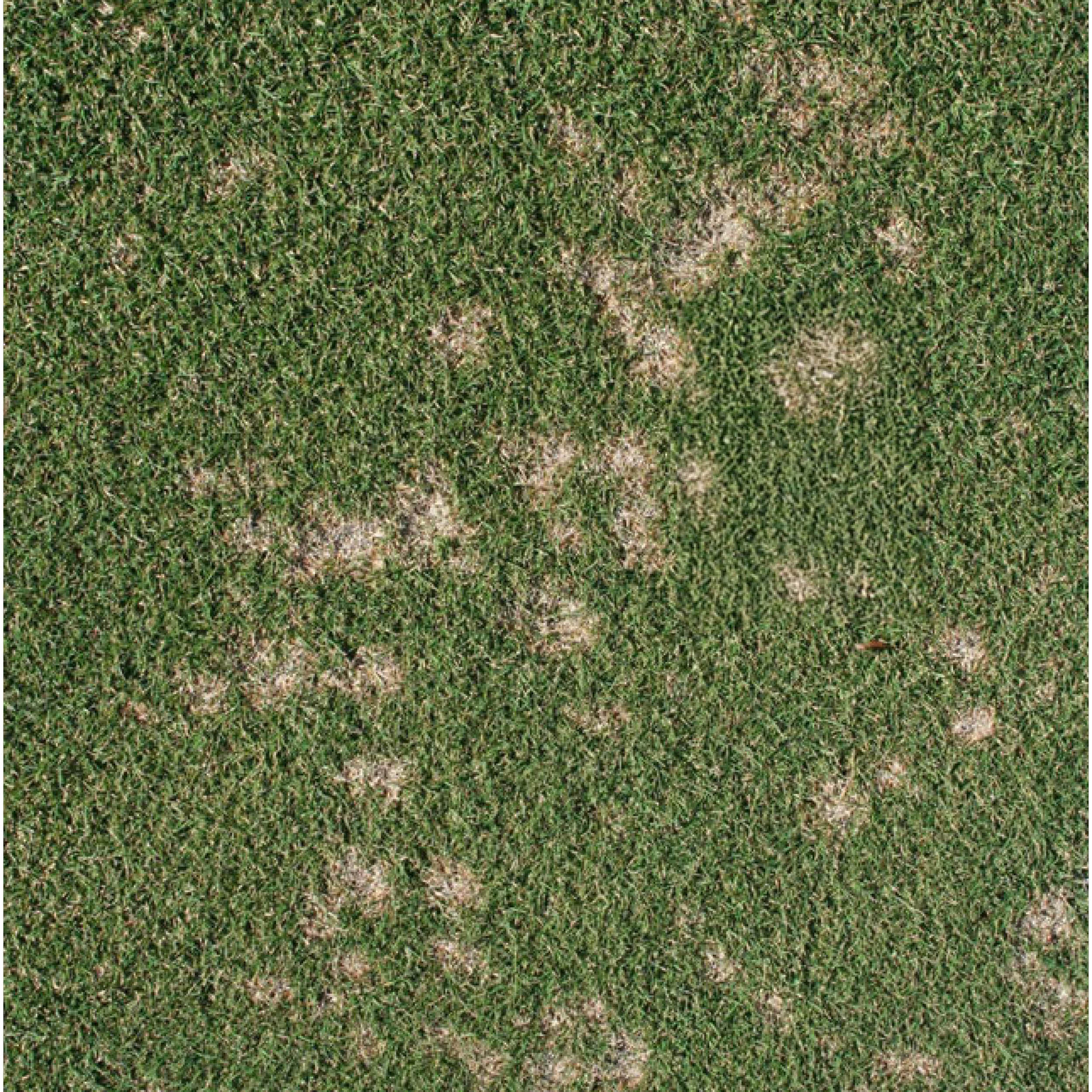
Image credits left to right: Dr. John Kaminski/Penn State University, NC State Extension,
Dr. Alfredo Martinez/UGA.
Disease | What It Looks Like | Conditions That Favor It | Plant Stress Connection |
Pythium (Blight / Root Rot) | Greasy, dark, water-soaked patches that can appear almost overnight; turf collapses and mats down; cottony mycelium visible in early morning when humid | Prolonged leaf wetness, poor drainage, heavy rain followed by heat, temps85°F+ with high humidity overnight | Explosive — can take down a green in 24-48 hours under saturated, hot conditions. Excess moisture is the single biggest trigger |
Anthracnose (Basal Rot) | Yellow to bronze irregular patches; black fruiting bodies (acervuliwith spines) visible on leaves/stems with a hand lens; thinning rather than sudden collapse | Compacted, stressed turf mowed too low; moderate-to-warm tempswith humidity; nutrient-deficient or drought-stressed turf | Strongly tied to plant stress and low nitrogen status — it is the textbook “weak host” disease |
Dollar Spot | Small, silver-dollar-sized sunken bleached spots that can coalesce into larger patches; hourglass-shaped lesions on individual blades; white cottony mycelium in dew | Warm days (60-85°F), cool humid nights, heavy dew, low nitrogen, drought-stressed turf | Classic low-nitrogen disease — turf running “hungry” is far more susceptible |
Understanding how a fungicide actually works — its mode of action — is what separates a program that holds all summer from one that breaks down in week six.
Why SDHI + DMI Combinations Earn Their Spot in July
This is exactly why July programs lean on SDHI (succinate dehydrogenase inhibitor) and DMI (demethylation inhibitor) combination products. SDHIs interrupt the fungal energy production pathway; DMIs block sterol biosynthesis the fungus needs to build healthy cell membranes. Pairing two different systemic modes of action in one product gives you:
- Broader spectrum control — covers more of the disease complex in a single pass, useful when anthracnose, dollar spot, and brown patch pressure can all show up in the same week
- Built-in resistance management — two unrelated modes of action working together make it statistically harder for any single pathogen population to survive and reproduce
- Stronger curative + residual performance — the DMI component often extends control duration while the SDHI provides fast knockdown
The Case for Rotation — Every Time, Not Just When Convenient
Fungicide resistance isn’t theoretical; it’s a documented, ongoing challenge in dollar spot and anthracnose populations on golf turf nationwide. Spraying the same single-site mode of action application after application selects for the few resistant individuals in the population until they become the dominant population. Rotating fungicides with different modes of action is the single most effective tool you have to keep every chemistry in your toolbox working for years instead of months.
- Never apply the same single-site mode of action back-to-back without rotating to a different mode of action
- Tank-mix or alternate a contact fungicide with your systemic applications to add a low-resistance-risk partner to every spray
- Track FRAC codes by application in your spray log — not just product names — since multiple branded products can share the same mode of action
- Reserve your strongest curative combinations (like SDHI+DMI) for breakthrough pressure rather than running them wall-to-wall all summer
Nitrogen is the single nutrient most directly tied to disease pressure in July — and it cuts both directions, which is exactly why it trips people up.
- Too little nitrogen: turf runs hungry, thin, and slow to recover from any stress — this is the exact environment dollar spot and anthracnose favor. An anthracnose outbreak is very often a signal the plant has been running on fumes.
- Too much nitrogen: pushes soft, succulent, fast-growing leaf tissue with thinner cell walls — exactly the tender growth brown patch and Pythium move through fastest, and it adds mowing and thatch stress on top of it.
The goal in July isn’t maximum or minimum nitrogen — it’s steady, light, frequent feeding (spoon-feeding) that keeps the plant in a stable nutritional state without ever pushing a flush of soft growth. Pair nitrogen decisions with potassium, which supports cell wall strength and stress tolerance, and consider foliar applications during peak heat when root uptake is already compromised.
Chemistry buys you time and control, but cultural practice is what actually changes the environment leg of the disease triangle. These are the habits worth reinforcing with your crew this month.
Water Management
- Water deeply and infrequently rather than daily light watering, which keeps the leaf surface wet and feeds disease
- Irrigate in the early morning hours so the canopy dries quickly in the sun — avoid irrigating in the heat of the day and late afternoon.
- Hand-water or syringe hot spots and high points in the afternoon to cool the canopy without saturating the rootzone
Air Movement & Light
- Run fans on greens with poor natural airflow — extended leaf wetness duration is one of the biggest controllable disease drivers
- Selectively prune or thin trees that are shading greens or blocking morning sun and airflow
Mowing & Rolling
- Raise mowing height slightly during peak heat stress windows if green speed demands allow it — every fraction of a millimeter helps carbohydrate reserves
- Consider rolling in place of mowing on the most stressed days to maintain speed without the added stress of a blade cut
- Keep mower blades sharp — a clean cut heals faster and gives disease less of an entry wound
Moisture & Firmness Monitoring
- Use a moisture meter to irrigate by data, not habit — overwatering “just in case” is one of the most common self-inflicted disease triggers
- Spot-treat dry, hot areas with a wetting agent rather than overwatering the whole green to compensate
Walk Your Greens Daily
- Early morning scouting, every green, every day during July — this is when symptoms are most visible and a small spot is still a small spot
- Keep a simple disease log noting location, symptoms, and date — patterns across a season point you toward drainage, airflow, or shade issues worth fixing long-term