
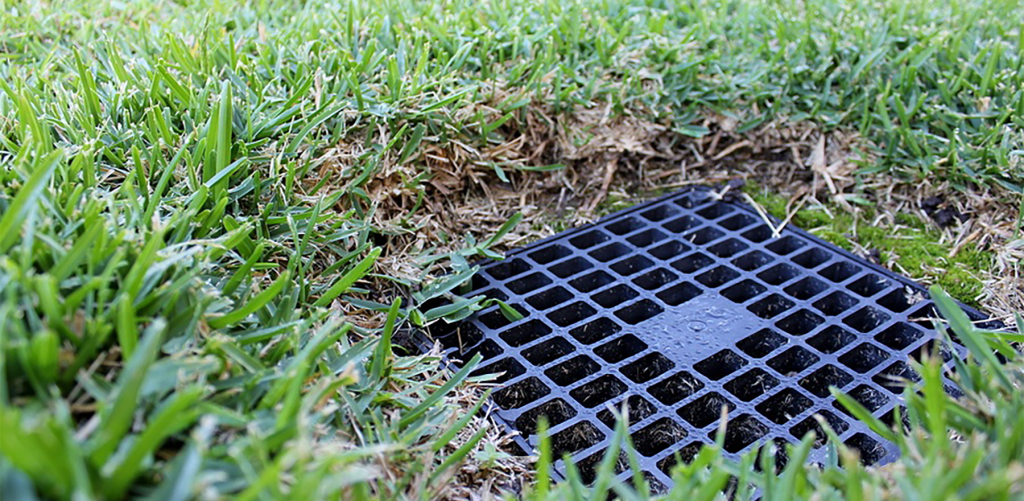


With the rains many of our contractors have dealt with the past few days, we all have an opportunity to assess the effectiveness of previously installed drainage systems. Major storms can overwhelm even well-designed drainage systems. Heavy rainfall often exposes weak points in both residential and commercial systems, leading to standing water, erosion, flooded yards and damaged landscapes. For contractors, the days and weeks following a major storm present an opportunity to identify drainage failures, recommend long-term solutions, and help property owners prevent future damage.
Start with a Comprehensive Site Assessment
The first step in solving any post-storm drainage issue is a thorough site evaluation. Contractors should inspect the property as soon as possible and identify areas where water accumulated, drainage structures failed, or erosion occurred.
Key items to evaluate include:
- Low spots where water ponded
- Overflowing catch basins
- Clogged drainpipes
- Damaged drainage grates
- Eroded slopes and swales
- Foundation water intrusion
- Downspout discharge locations
- Saturated lawns and landscaped areas
Speaking with property owners can also provide valuable information about where flooding occurred and how long water remained on the site. If standing water has dissipated 24 hours after the event, the urgency on alleviating standing water becomes less of a priority. Ket things to note however are signs of erosion and wash outs in bed and lawn areas. These are signs that the system may not be performing at an optimal level.
Clear Obstructions First
Many drainage problems following storms are caused by debris. Leaves, branches, sediment, and trash can quickly block inlets, pipes, catch basins, and channel drains. This is often the first and most obvious problem and clearing debris should be best practice as regular maintenance. Be sure to make sure the system is clear of debris before recommending further steps.
Establish Correct Sizing
After alleviating any blockages and ruling that out as a culprit, the next thing to consider is the sizing of the capture devices and the pipe carrying the water. Many contractors simply utilize a standard system of both capture and conveyance (pipe) when installing a system. This is typically 4-inch pipe, either a 12-inch basin of direct plumbing with PVC or corrugated downspout adaptors and a single pop up at the end of the line. While many times this is adequate for smaller systems in less intense storm events, larger summertime downpours can easily overwhelm the “standard” sized system. This is a great opportunity to check the size of your system by using a drainage calculator. The link below takes you to the NDS drainage calculator and double checking the capacity of what is in the ground will ensure you have the correctly sized system to handle most any event.
https://www.ndspro.com/us/en/resources/calculators/drainage-calculator
*One thing to note is use of pop-up emitters. A 4-inch pop up will only handle 40 gallons of water per minute. If you have a 4-inch PVC pipe moving 120 GPM, you will need to add three pop ups via a pair of wyes to handle the flow of water. This is the number one bottle neck in a residential drainage system.
Stabilize Erosion-Prone Areas
Heavy events will also expose areas of erosion at outlet points in the system. Adding stone or erosion mats at outlet points goes a long way to preventing erosion at key points in the system. The goal is to slow water velocity while protecting exposed soil. Combining structural solutions with vegetation often provides the most durable long-term results.
Consider Infiltration and Storage Solutions
As development increases and permeable surfaces decrease, managing stormwater volume becomes just as important as moving water away.
Many contractors now recommend systems that capture and infiltrate runoff, including:
- Dry wells
- Infiltration chambers
- Rain gardens
- Permeable pavers
- Underground detention systems
- French Drains
The more water that is detained between the capture and outlet point of a system, the less water is discharged. Adding storage throughout the conveyance pipe will greatly reduce erosion and problems for neighboring properties. This is a best management practice (BMP) and should be considered on every drainage installation.
Plan for Future Storm Events
Perhaps the most important lesson after a major storm is that weather patterns are becoming increasingly unpredictable. Contractors should encourage customers to think beyond repairing immediate damage and focus on building resilience.
A comprehensive drainage plan should address both everyday rainfall and extreme storm events. This may involve combining surface grading, collection systems, conveyance piping, erosion control, and stormwater storage into a single integrated solution.
We recognize the opportunity for our contractors in the Drainage category. We want to be your partner in your success. From residential installations for the contractor looking to diversify, to the established excavator looking for the right distributor to service his projects from takeoff to delivery, Central Pros is your partner for 2026!