
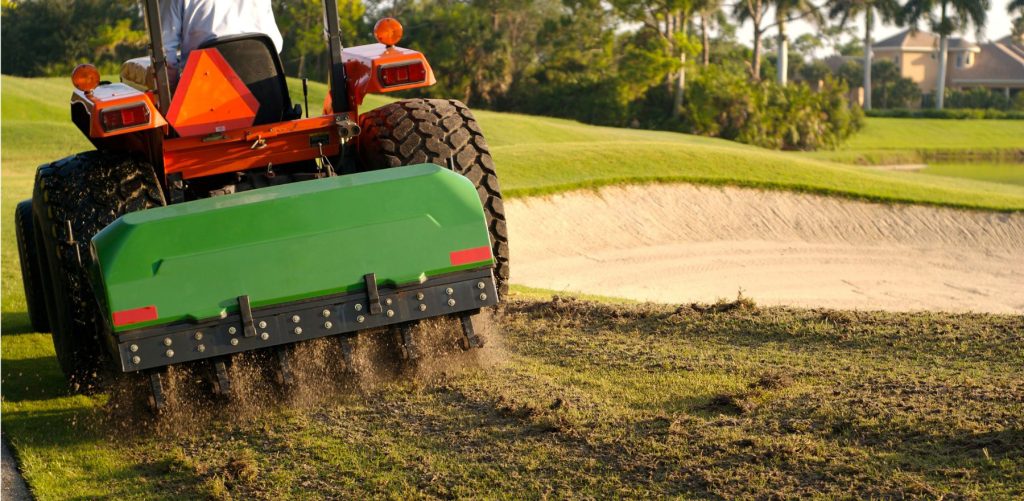


Fall is the highest-leverage window of the year for root development. Soil temps are dropping into the ideal germination range, day/night swings favor tillering, and there’s still enough growing season left for new turf to establish before dormancy or winter stress sets in.
The two jobs feed each other. Aerify first (or same week) to open the canopy and create seed-to-soil contact, then overseed into those channels. Skipping the aerification step and seeding into a thick canopy is one of the most common — and costly — mistakes we see.
Timing matters more than the calendar. Watch soil temperature, not just the date. Most cool-season overseed blends germinate best in the 50–65°F soil range. Go too early into warm soil and you’ll fight seedling disease; go too late and you’re racing the first hard frost.
More seed isn’t more turf — it’s more competition. Stick to labeled rates and let germination aids do the work of improving establishment, not seed volume.
New seedlings need available phosphorus and light nitrogen to root fast. Straight high-N programs push top growth before the root system can support it.
Germinating seed needs frequent, light watering — not deep infrequent cycles. A lapse of even a day or two during the germination window can wipe out a stand.
Seed on compacted soil sits on top instead of rooting in. This is why aerification isn’t optional — it’s the foundation the whole program depends on.
A quality germination cover or compost holds moisture at the seed level and can shave days off emergence, especially on sloped or high-traffic areas.
Product Spotlight — Overseed Program
- Rye & Fescue Blends — Our fall lineup is in stock and ready for order, from quick-establish perennial rye for overseed windows to fescue blends built for shade and low-traffic roughs.
- Germination Aids — Compost and organic amendments to protect seed-to-soil contact and even out moisture during the critical first 10–14 days.
- Soil Amendments — Gypsum, humic/fulvic packages, and biological amendments to open up compacted profiles ahead of or alongside core aerification.
Ask your Central Pro rep for current availability and fall pricing — early commitment on rye/fescue tonnage locks in your supply before the fall rush.
Not Overseeding This Year? Here's Your Fall Playbook: Pigments & Paints
Overseeding isn’t the right call for every course — labor, water, budget, or play-disruption during transition can all be reasons to stay dormant instead. If that’s your plan, turf pigments and paints are worth building into your fall program now, not waiting until turf has already gone off-color in November.
Why courses use them:
- Consistent color without the agronomic cost of overseed. No seed, no transition stress, no extra irrigation demand during germination — you keep playable, dormant turf looking sharp for members and guests.
- UV and stress protection. Many pigment products aren’t just cosmetic — they reflect UV and can reduce desiccation stress on dormant or stressed turf through the shoulder season and into winter.
- Budget predictability. Paint/pigment programs are typically far less costly than a full overseed program in seed, labor, and water combined — a real consideration if this year’s budget is tight.
Pigment vs. Paint — know the difference before you order:
- Pigments are typically diluted and sprayed as a lighter, more natural-looking color that blends with the plant as it fades toward dormancy — often used on actively growing turf that’s just losing color under stress, or as a season-long maintenance color program.
- Paints lay down a heavier, more uniform color — the standard choice for turf that’s gone fully dormant and needs a consistent green look through the winter (this is where most non-overseeded courses land for fall/winter).


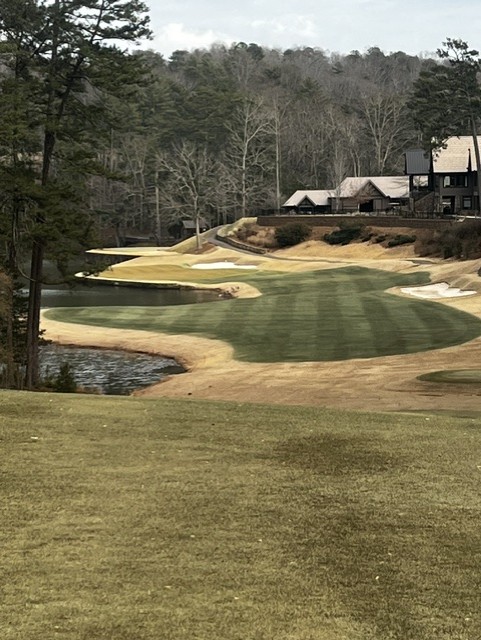
Timing tip: Don’t wait for turf to go completely brown before your first application. A pigment or light paint pass as turf is transitioning holds color better and requires less product than trying to “rescue” fully dormant, faded turf later.
We carry GuruScapes Turf Pigments and Paints, and can help you build out a fall/winter color program — including which product fits your turf type, expected traffic, and how many applications to budget for the season. Ask your rep for a walkthrough.
Moisture Tips for the Establishment Window (Overseed Programs)
- Light, frequent syringe cycles (multiple short cycles/day) until germination, then transition to deeper, less frequent watering as roots establish.
- Watch shaded and low-airflow areas separately — they dry differently than open fairways and can go the other direction (staying too wet, inviting seedling disease).
- Pull back nitrogen if you’re seeing excessive top growth before root mass catches up — it’s a sign the program is out of balance.