


Over the last few months, these articles have boiled down to a few key ideas: preparation and opportunity. As temperatures drop and leaves begin to fall, many property owners shift their focus away from stormwater management and toward the inevitability of snow and cold winter weather.
However, November is one of the most critical months for drainage system maintenance. Problems that develop or go unnoticed during late fall often become major failures when snowmelt and spring rain arrive. Understanding these seasonal risks can help prevent costly damage to landscapes, building foundations, and outdoor living spaces.
Common November Drainage Issues
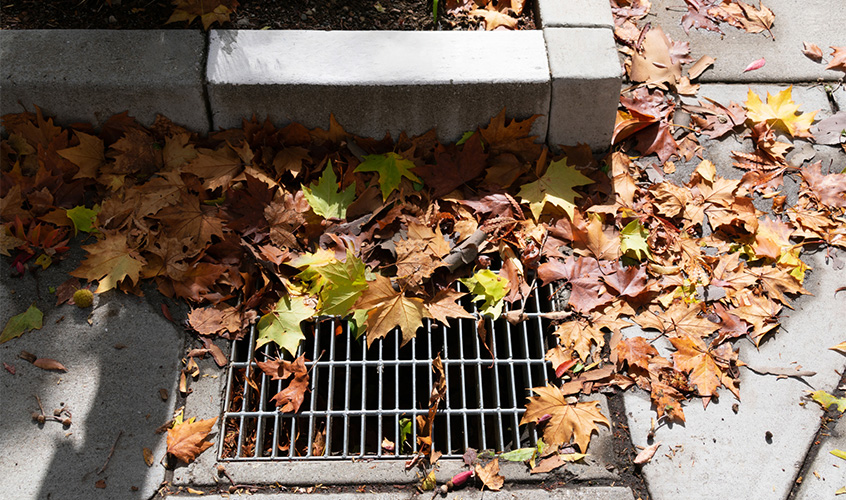
One of the most common November drainage issues is the accumulation of leaves and organic debris in catch basins, yard drains, stormwater inlets, and channel drains.
I challenge you to walk down any Main Street in America and look for a sidewalk drain that has been rendered useless due to the accumulation of organic debris and trash. You will be hard-pressed to find one.
While a partially blocked drain may not appear problematic during dry autumn weather, it significantly reduces the system’s capacity and ability to move water effectively.
Over the winter, trapped debris can compact, freeze, and create complete blockages. When spring rainfall increases, water backs up, resulting in:
- Ponding
- Erosion
- Potential flooding
Throughout the year, soil, decomposing mulch, and other materials, such as tree litter and seed pods, are carried into drainage systems. By November, many systems are already operating with reduced capacity due to clogged inlets and pipes.
If sediment is not removed before winter, spring runoff can overwhelm pipes and basins, causing water to escape intended drainage paths and damage surrounding property.
The same concept applies to gutters. Homeowners know to keep their gutters clean on a regular basis, but the same attention is often not given to the drainage systems on their properties.
Freeze-thaw cycles create additional challenges. Small cracks in pipes, drainage channels, and concrete structures often go unnoticed during normal weather conditions.
As temperatures fluctuate, water enters these cracks, freezes, expands, and enlarges the damage. By spring, what began as a minor defect can develop into:
Pipe separations
Collapsed sections
Structural failures requiring extensive repairs
November is also a critical time to inspect outlet structures and discharge points. The discharge point is often minimized in importance, but it is arguably the most important component of a drainage system.
Vegetation growth from the previous season, fallen branches, and accumulated debris can obstruct water flow. During winter, these obstructions may trap ice and further restrict discharge capacity.
The result is a drainage system that cannot efficiently move water during spring peak-flow events. This can easily cause backups at the collection point, which is often directly adjacent to the house.
Prevent Spring Drainage Failures Before Winter
The best way to avoid spring drainage failures is through preventative action in November, before freezing temperatures take hold.
Taking the time to prepare drainage systems for winter can significantly improve performance and save property owners a lot of headaches once the weather warms up.
Key maintenance steps include:
Cleaning drains and removing leaves and organic debris
Removing sediment from basins, inlets, and pipes
Inspecting pipes and drainage channels for cracks or damage
Verifying outlet conditions to ensure water can flow freely
Addressing minor repairs before winter conditions make them worse
A thorough late-season inspection allows property owners to identify vulnerabilities when repairs are simpler and less expensive.
Turn Seasonal Maintenance into Revenue Opportunities
November maintenance also creates an opportunity for contractors at a time of year when additional cash flow becomes imperative.
The more revenue you can create before Christmas, the less stress you will have to carry until spring comes again.
By reaching out to customers about drainage inspections and necessary repairs, contractors can:
Generate additional revenue before winter
Address smaller problems before they become costly repairs
Strengthen customer relationships through proactive service
Position themselves as trusted advisors who help customers protect their properties
The Time to Act Is Now
Ultimately, effective drainage management is not just a spring concern. The conditions that cause spring failures often begin months earlier.
By addressing maintenance needs and capitalizing on repair opportunities in November, contractors can strengthen customer relationships, establish themselves as trusted advisors, and create additional revenue during one of the slowest points of the year.
By addressing November drainage problems proactively, property owners can protect their properties, reduce repair costs, and ensure their drainage systems perform reliably when spring weather arrives.