
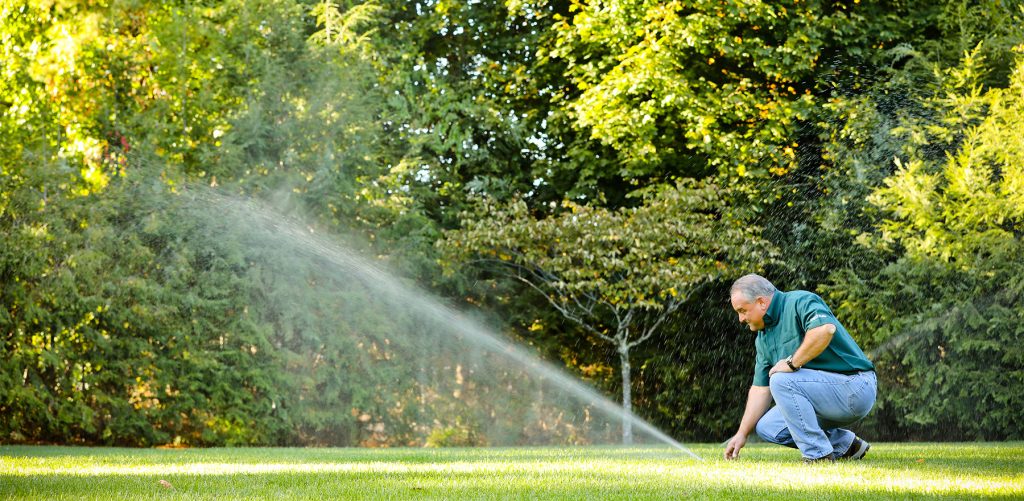


As irrigation professionals, every design choice we make impacts more than plant health—it affects water usage, labor costs, callbacks, and long-term profitability. Choosing between drip irrigation and spray heads isn’t just about coverage; it’s about efficiency, compliance, and creating systems that deliver measurable value for both you and your customers.
When systems are designed with efficiency in mind, contractors benefit from smoother installs, fewer service issues, happier clients, and stronger upsell opportunities.
Drip Irrigation: Precision That Pays Off
Drip irrigation delivers water slowly and directly to plant root zones through emitters and tubing. By eliminating overspray and runoff, drip systems maximize water efficiency while minimizing waste—making them one of the most cost-effective solutions for targeted watering.
Because drip operates at lower pressure and applies water only where it’s needed, it helps reduce water bills, supports regulatory compliance, and lowers the risk of plant stress or disease. For contractors, that translates into fewer callbacks and more reliable performance.
Ideal Applications:
- Trees and shrubs
- Flower and landscape beds
- Containerized plants
- Foundation and perimeter plantings
Why Drip Improves Profitability
Drip irrigation allows contractors to add precision watering without redesigning an entire system. It’s an efficient upgrade that increases system value while controlling installation time and material costs.
Customer-facing talking points:
- “Drip irrigation waters the plant, not the pavement—so you’re paying for less wasted water.”
- “We can convert high-waste zones to drip without rebuilding your whole system.”
- “This setup helps meet water regulations and lowers monthly operating costs.”
Positioning drip as an efficiency upgrade makes it easier for customers to justify the investment—and easier for you to increase average job size.
Spray Heads: Efficient Coverage for Large Areas
Spray heads remain the most practical solution for turf and wide-open spaces. They provide fast, uniform coverage and are often quicker to install, which helps control labor costs on larger projects.
Modern spray technology has significantly improved efficiency. High-efficiency nozzles, matched precipitation rates, and smart controllers reduce runoff and overspray while maintaining healthy turf—making spray systems far more profitable than outdated designs.
Ideal Applications:
- Large turf areas
- Athletic fields
- Commercial and municipal landscapes
- Newly seeded lawns
Increasing Returns with Spray Systems
Spray systems create ongoing upgrade opportunities. Replacing inefficient heads or outdated nozzles can significantly improve performance without a full system replacement.
Customer-facing talking points:
- “Upgraded nozzles deliver even coverage with less water.”
- This adjustment reduces runoff and cuts waste in problem areas.”
- “Efficient spray design helps protect new seed and reduces rework.”
Efficiency-focused spray upgrades improve results while keeping projects scalable and repeatable.
Hybrid Systems: Maximum Efficiency, Maximum Value
The most efficient—and most profitable—irrigation designs often use both drip and spray. Turf zones benefit from spray coverage, while beds, trees, and planters perform better with drip. Separating these zones allows each area to be watered correctly, reducing waste and improving overall system performance.
Hybrid systems also open the door to phased upgrades, making it easier for customers to invest over time while you expand the scope of work.
Turning the Entire Property into Opportunity
Many systems stop at the lawn—but efficiency gains don’t. Beds, containers, tree rings, and specialty landscapes are often overwatered or poorly served by spray.
Each of these areas represents:
- Reduced water waste for the customer
- Improved plant health
- Additional revenue for the contractor
Conversation starters with existing clients:
- “Let’s review your system to make sure every zone is watering efficiently.”
- “We now offer drip options that can improve performance in your beds.”
- “Converting these zones to drip could lower water use and reduce maintenance.”
Efficiency-focused audits position you as a trusted advisor—not just a service provider.
Grow Smarter with Central
At Central, we help contractors turn efficient irrigation design into a more profitable business. Our support goes beyond products to include:
- Technical training that reduces install time and troubleshooting
- Sales tools and education to confidently present upgrades
- Local branch support and account reps who understand your growth goals
Conclusion
Understanding the strengths of drip irrigation and spray heads allows you to design systems that work smarter—not harder. Contractors who focus on efficiency gain more than water savings: they gain customer trust, repeat business, and higher-margin opportunities.
By using the right solution in the right zone, you can improve performance, reduce waste, and grow your bottom line. Let Central help you turn smarter irrigation design into sustainable profitability. Contact your local branch or account representative to get started.