
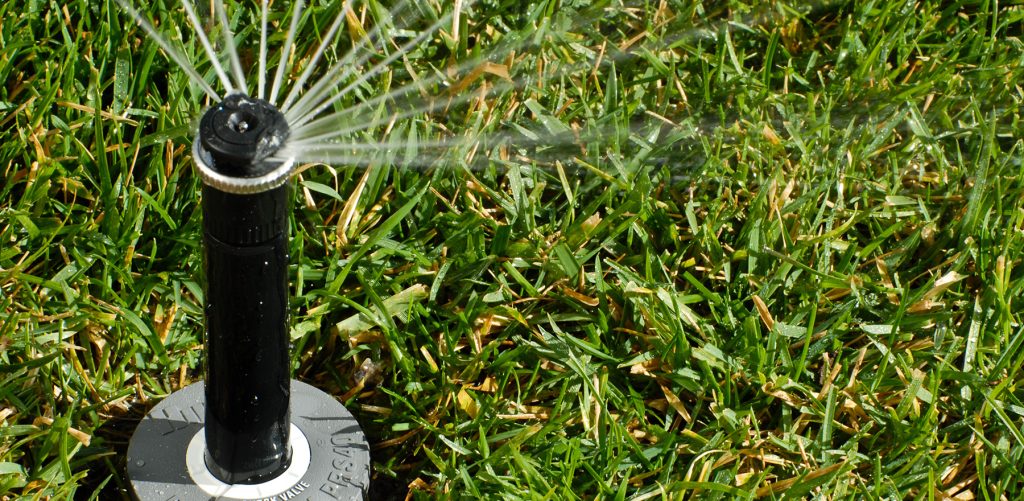


When choosing between pressure regulated sprays (PRS) and non-regulated sprays it will depend primarily on local regulatory compliance and your local water pressure. Standard spray heads perform best at 30 PSI, however some residential irrigation systems deliver pressure significantly higher.
Benefits of Pressure Regulated Sprays (PRS)
Pressure regulated heads like the Hunter Pro-Spray 30 PSI or the Rain Bird RD1800 Series contain an internal mechanism that caps the water pressure at a specific level (usually 30 or 40 PSI).
- Eliminates Misting: High pressure causes water to turn into a fine mist that drifts away in the wind. PRS keeps droplets larger so they actually reach your grass.
- Uniform Coverage: By maintaining a constant pressure at every head, the entire zone gets the same amount of water, preventing dry spots.
- Leak Mitigation: If a nozzle is kicked off or damaged, the regulator restricts the flow, preventing a massive “geyser” and saving up to 70% of the water that would otherwise be wasted.
- Regulatory Compliance: Many states, including NJ, MD, MA, NY, California, Washington, and Colorado, now require PRS heads for all new installations to conserve water.
When to Use Non-Regulated Sprays
Standard heads like the Rain Bird 1800 Series are the better choice only if your water pressure is already low (below 35 PSI). Because regulators cause a small “pressure drop” of about 5 PSI just to function, installing them on a low-pressure system can prevent the heads from popping up or reaching their full spray distance.
Recommendation
If your system operates above 40 PSI, you should choose Pressure Regulated Sprays. While they have a slightly higher upfront cost, the 20–30% water savings typically pays for the upgrade within a few seasons.
Rain Bird PRS Spray Head Benefits
This video demonstrates the visual difference in water waste between regulated and non-regulated heads.